Care that nevermisses a word.
Smart glasses that caption, translate and remember, built for carers and the people they support.
The world isn't captioned.
Screens are subtitled. Rooms aren't. For the people carers support, that shows up as missed instructions, names that won't surface, and signed questions nobody can read.
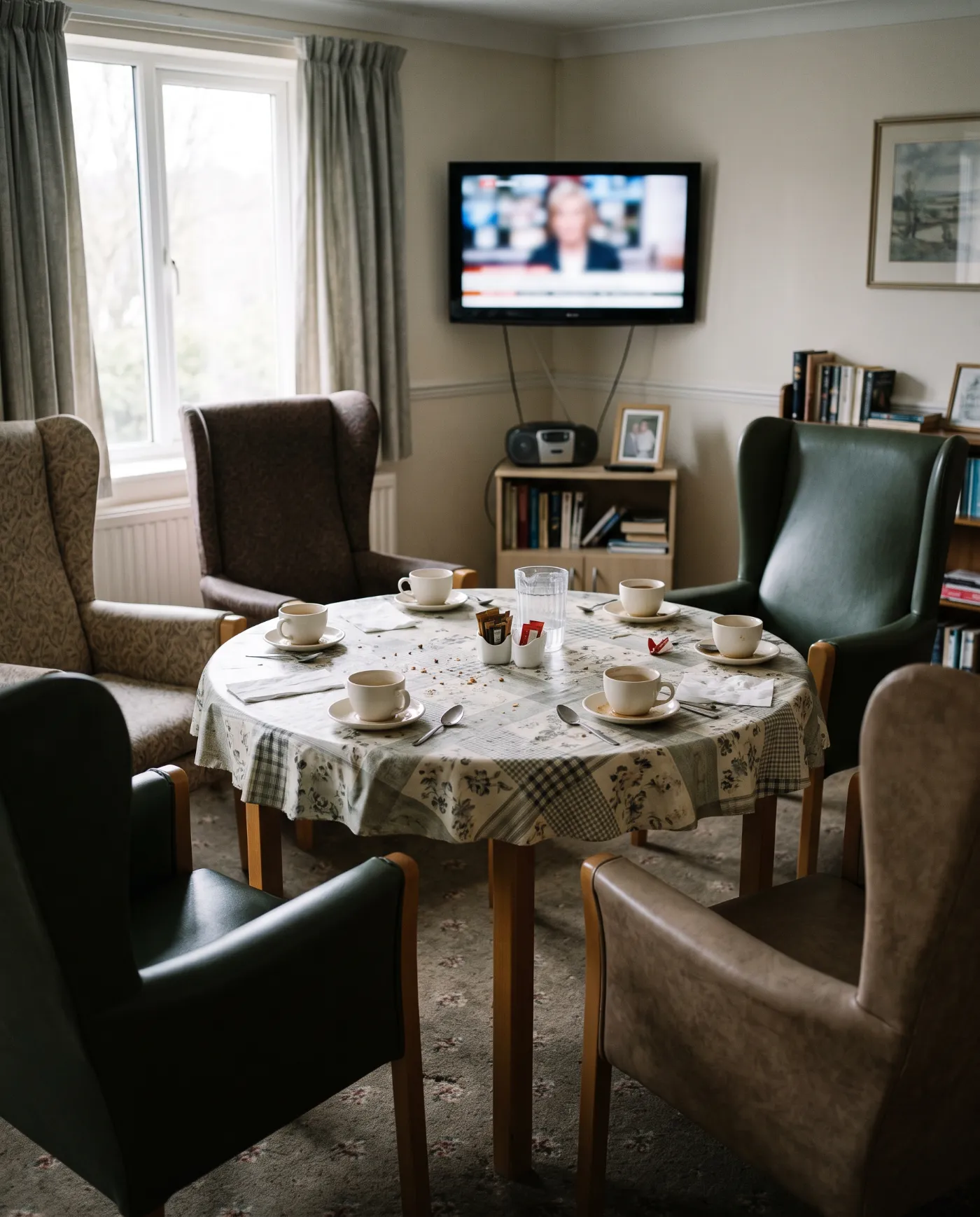
Six abilities. One ordinary-looking pair of glasses.
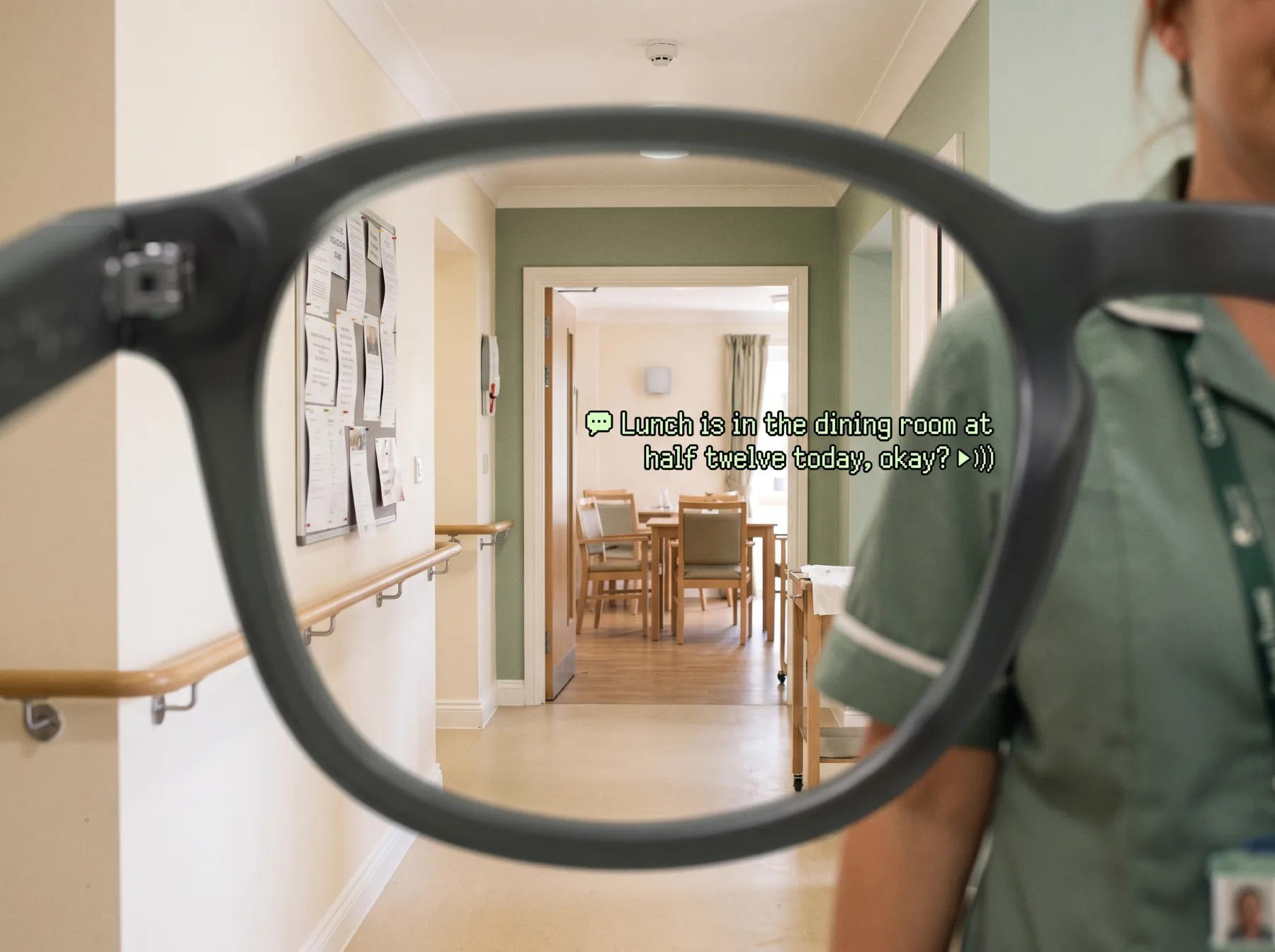
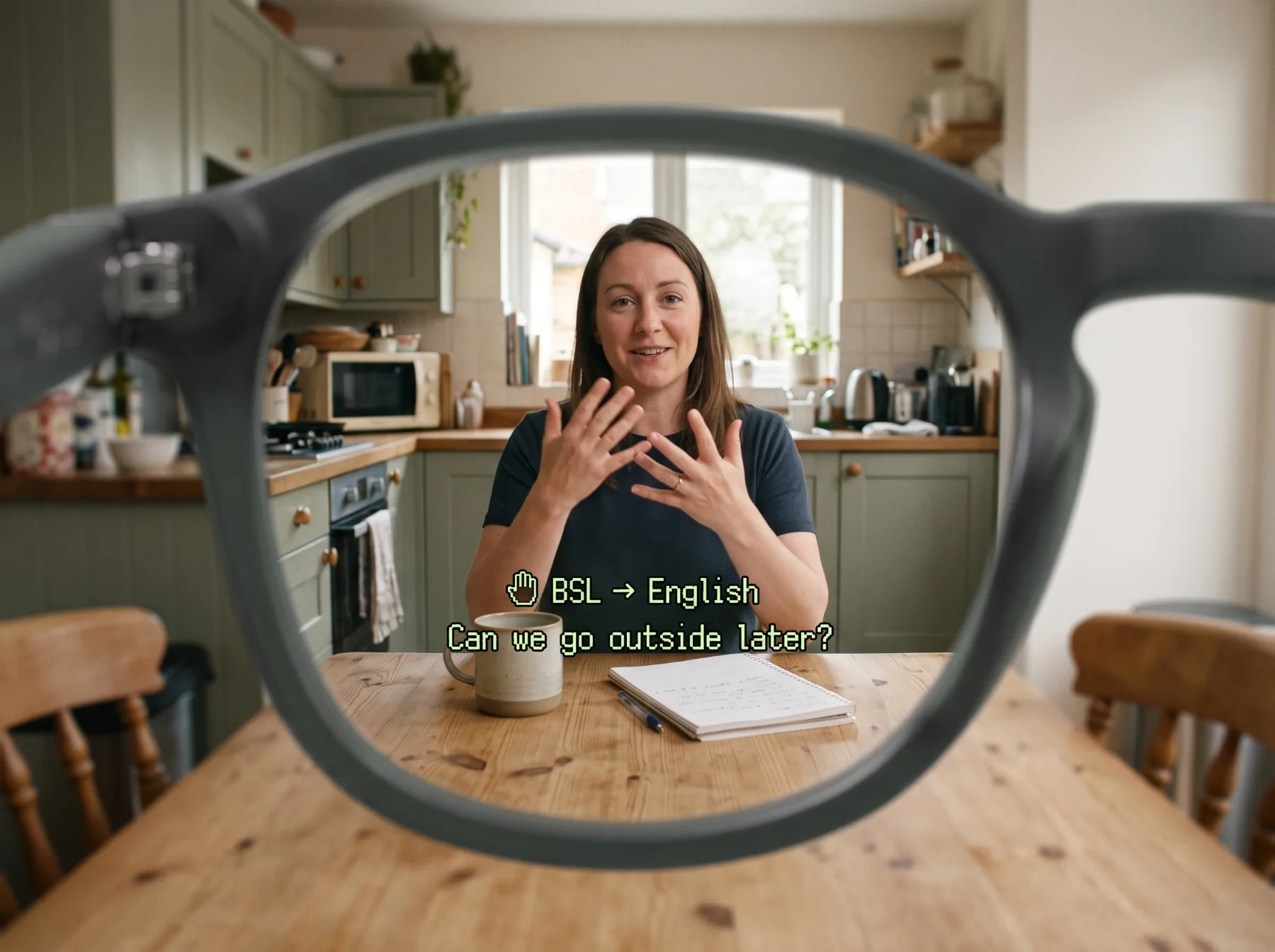
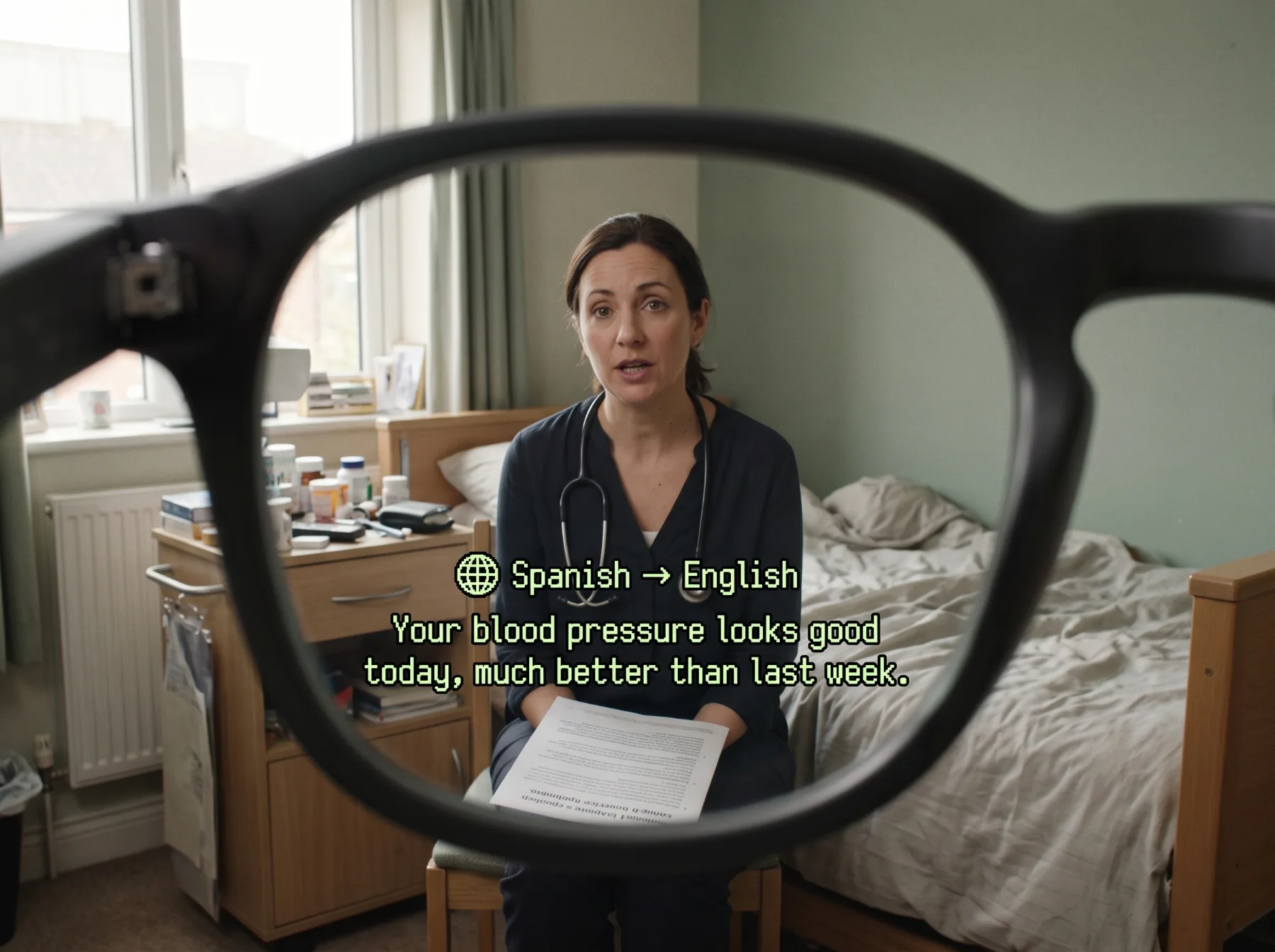
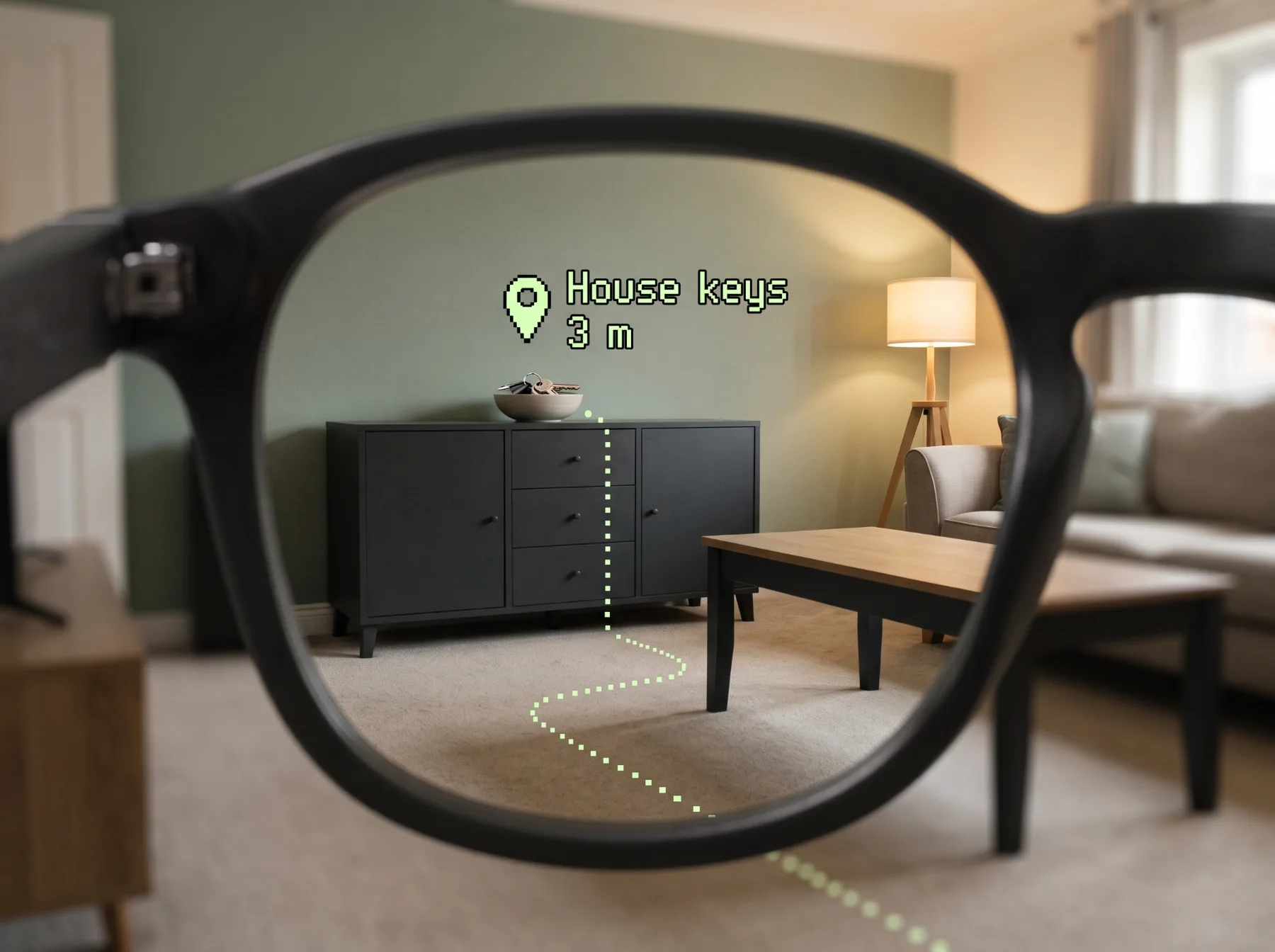
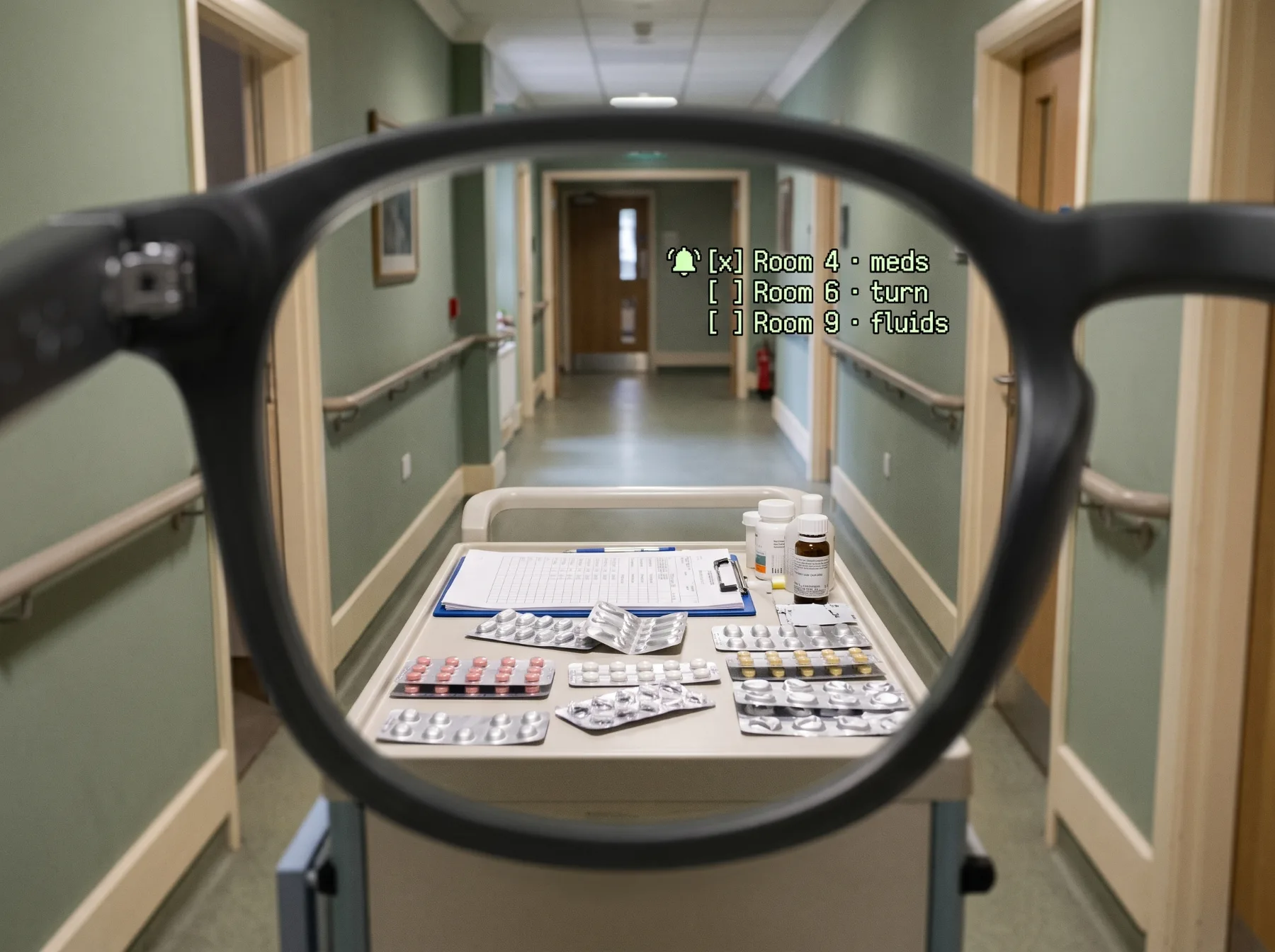
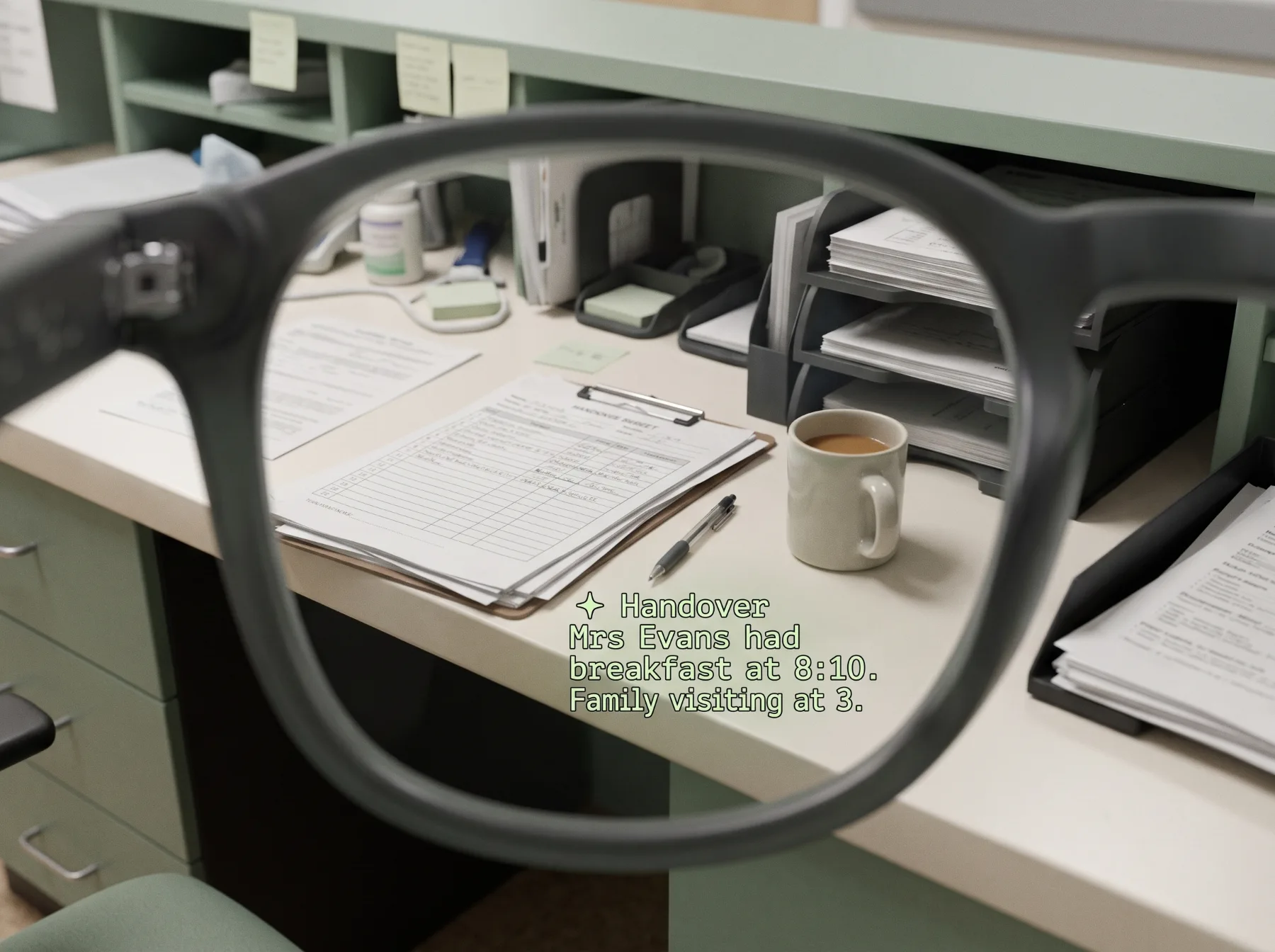
Smart glasses, built for care.
Consumer AI glasses are made for capturing and sharing. Care needs understanding without recording, consent by default, and a battery that outlasts a shift.
Consumer column describes the category in general. Battery: HearingTracker, June 2026. Bythdall figures are design goals for a prototype in development.
Who & cost3 points
Technology4 points
Privacy & care4 points
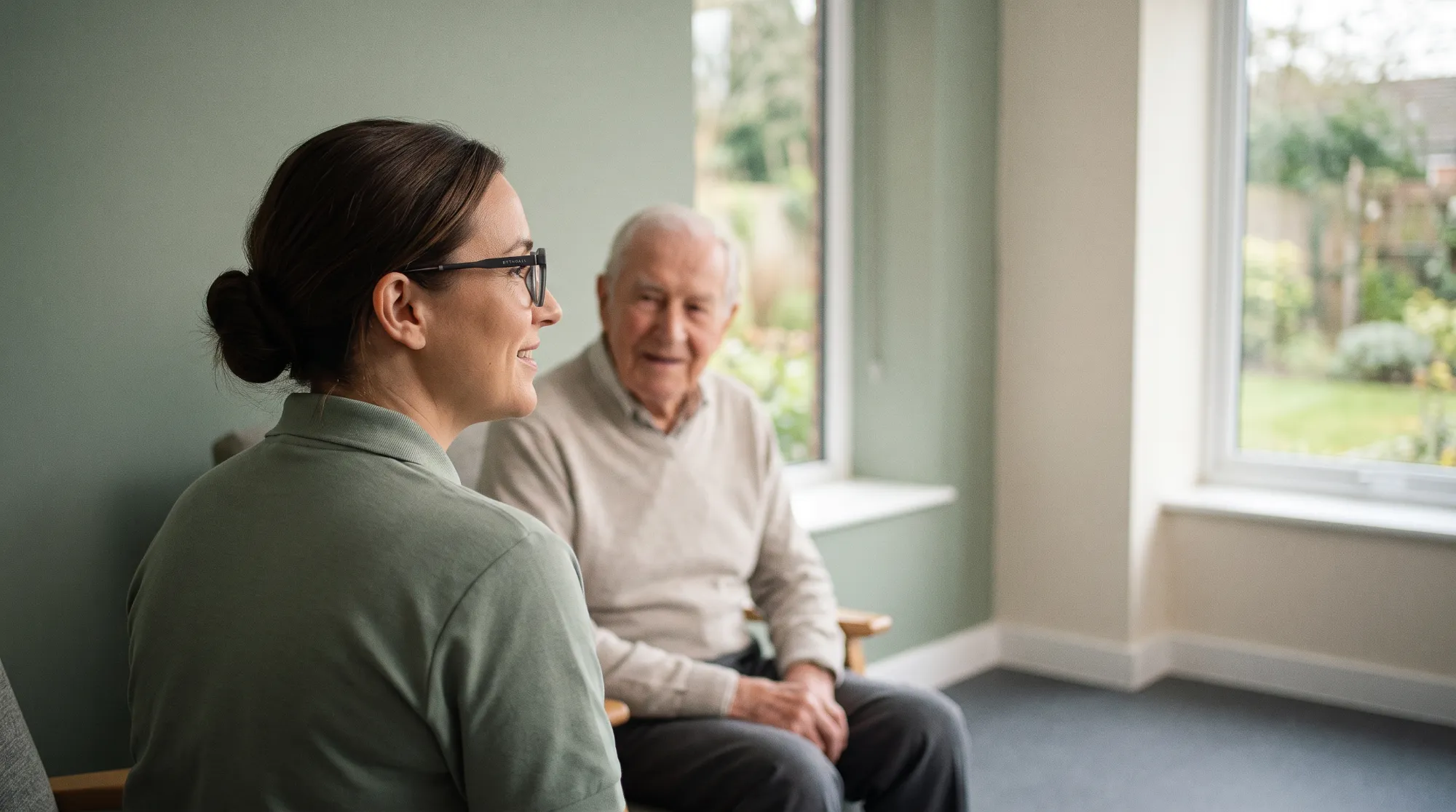
Quietly clever, mostly asleep.
Designed like an e-reader, not a phone. The glasses rest until something matters, then help, and rest again.
- 01 Wake A wake word, a movement or a scheduled task.
- 02 Understand Speech, signs and objects, read on the device.
- 03 Respond A caption, a name or a gentle prompt.
- 04 Forget Frames are deleted straight away. Only a short note remains.
What stays, and what goes.
Every moment the glasses help with ends the same way: the useful part is kept as a few words, and everything else is let go.
- VideoFrames are read on the glasses, then deleted.
- Audio recordingsSpeech becomes text; the sound itself is not saved.
- People who haven’t opted inNo names, notes or reminders about them.
- Unapproved roomsMemory stays off outside places the provider has approved.
- Short text notesOnly where the wearer and the people involved have agreed.
- Reminders you setMedication rounds, turns and appointments.
- Names of opted-in peopleSo a face or voice can be matched to a name.
- Where things were put downKeys, glasses, a cup of tea, in approved rooms.
Built for the realities of care work.
- Agency staff, first shift. Names and preferences surface the moment they meet.
- The med round. Tasks in order, checked off as they're done.
- A deaf resident, included. Conversation without waiting for an interpreter.
- Handover, remembered. Who said what, and when.
- Families, reassured. Agreed updates shared, with consent.

Privacy is the architecture, not a setting.
A camera near vulnerable people is only acceptable if privacy is structural. Ours is. Ask the questions people ask us.
Frames are understood on the glasses, then deleted straight away. There is no footage to leak, request or misuse. Only a short text note, if one is needed.
Why it matters.
Millions of people miss conversations, signs and small moments every day. Glasses that could help are now ordinary to wear, but none are made for them. Every figure links to its source.
None translates sign language, remembers names or tasks, or is built around care-sector consent.
The name means "never blind."
A Welsh-rooted name for a device that never stops noticing on your behalf. We build with signing users, carers and people living with memory conditions, and where something is still research, we say so.
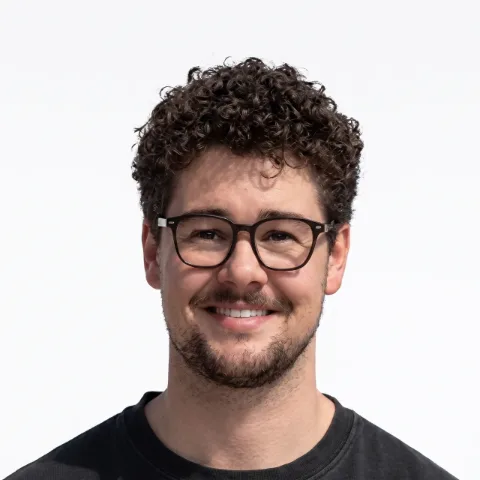
Founded in Wales by Owain Routledge, a software developer from age 9, and polyglot who generally enjoys the beauty of communication between one another. hello@bythdall.com

The round.
Bythdall is raising $255,000 pre-seed to take the product from working concept to a pilot-ready prototype in twelve months.
This is de-risking money, not manufacturing money. We use off-the-shelf development hardware, run real trials, and report real measurements.
Use of funds
Every dollar goes towards a pilot-ready prototype and the evidence to back it.
- Engineering & AI development$102,000 · 40%
On-device speech, sign and memory models, and the software that runs them.
- Hardware & prototyping$56,100 · 22%
Development kits, displays, sensors and wearable prototype builds.
- Pilot & accessibility partners$35,700 · 14%
Paying signing users, carers and partner care homes for their time and expertise.
- Data & model training$25,500 · 10%
Consented datasets, BSL recordings and compute for training and testing.
- Design, brand & IP$17,850 · 7%
Industrial design, accessible UX and patent filings.
- Operating runway$17,850 · 7%
Insurance, legal, compliance and day-to-day costs.
From prototype to pilot.
Twelve months to a pilot-ready prototype, then a careful route into care settings.
Twelve months
- 01Bench prototypeMonths 1–3Captions working end-to-end on development hardwareDisplay approach validatedTrial protocol co-written with signing users and carers
- 02Power & thermal proofMonths 4–6Battery life measured honestly and publishedComfort and heat tested on all-day wearFirst care partners signed for pilots
- 03Supervised trialsMonths 7–9Deaf, hard-of-hearing and memory-support cohortsConsent and safeguarding reviewed with partnersMemory and reminders tested in approved rooms
- 04Pilot-readyMonths 10–12Wearable prototype and trial resultsIP filedSeed-round package prepared
- Now Step 01Co-designBuild with signing users, carers and people living with memory conditions from the first prototype.
- 2027 Step 02Supervised pilotsFree, supervised pilots with UK care providers, measured against clear outcomes.
- After pilots Step 03Provider contractsCare providers buy for their teams and residents, with set-up, training and support included.
- Later Step 04Families & individualsDirect availability for families and Deaf and hard-of-hearing people, once proven in care.
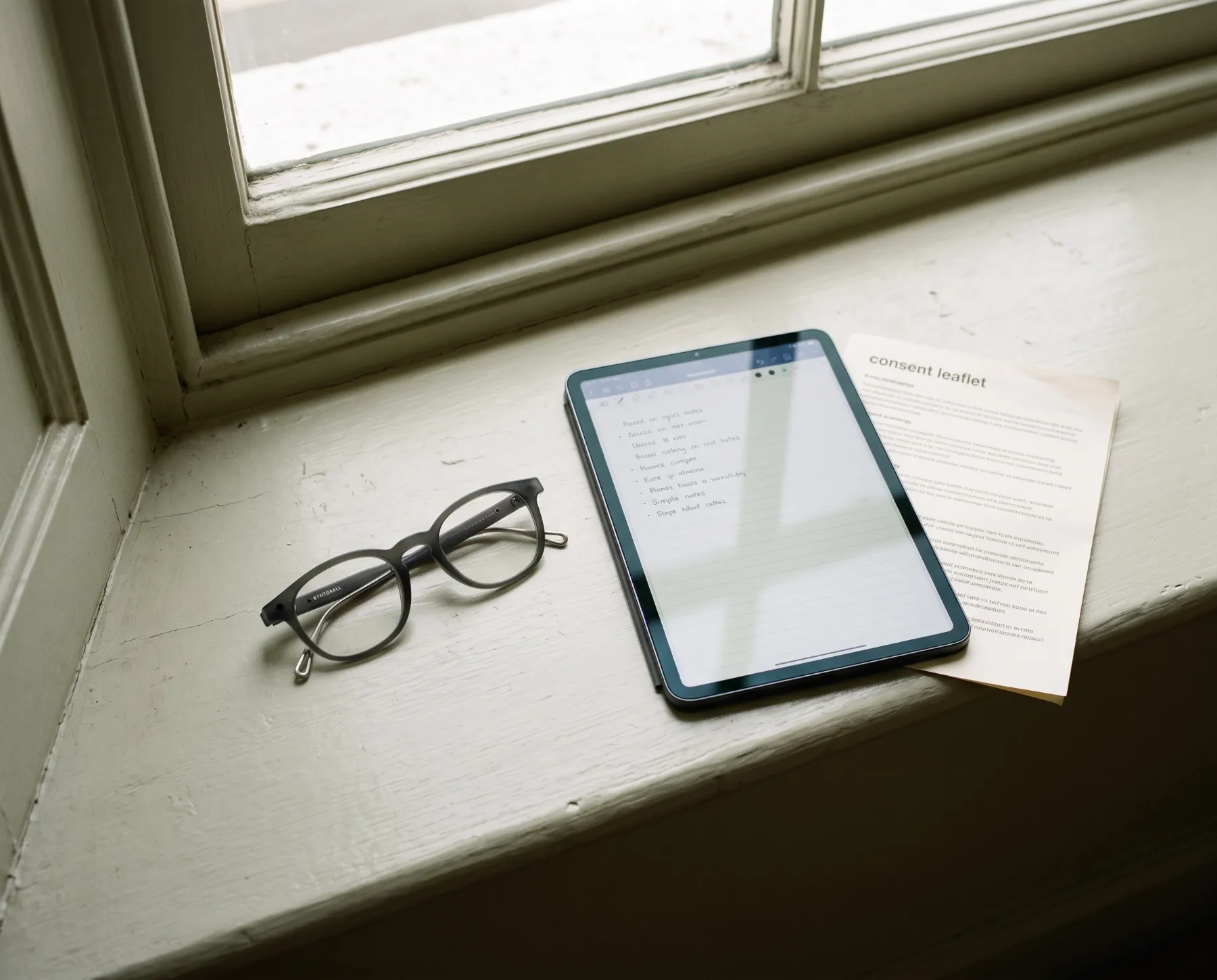
Questions, answered.
No. A light shows whenever the glasses are sensing, video is never stored, and memory only works in rooms the provider has approved, about people who have opted in.
Only the wearer, or their legal representative. Providers see only what consent settings allow; Bythdall itself sees no personal memory content.
Their entries are erased straight away, and the glasses stop remembering them. No reason is needed.
Bythdall supports care staff; it never replaces their judgement or clinical decisions. Regulatory positioning will be confirmed with counsel before pilots and stated here.
Talk to us.
Care providers, signers, families, investors, or anyone who wants this to exist.
Thank you. We'll reply within three working days.
If your email app didn't open, write to hello@bythdall.com.